Views: 0 Author: Site Editor Publish Time: 2025-12-10 Origin: Site


Your engine needs clean air to run properly. The air filter is the first line of defense against dust, dirt, sand, and other debris that can enter your engine and cause damage. Choosing the right air filter for your vehicle engine is not complicated, but it does require attention to a few key factors: filter type, size, fitment, efficiency, and driving conditions.
This guide will walk you through everything you need to know to make an informed decision.
Check your vehicle’s specifications before buying. The correct size and fitment are essential for proper engine protection.
Choose the right filter type based on your driving environment. Standard filters work for daily driving; heavy-duty filters are better for dusty or off-road conditions.
Understand efficiency ratings. Higher efficiency means better particle capture, but it may also affect airflow.
Replace your air filter regularly. Most vehicles need a new filter every 12,000 to 15,000 miles or once a year, depending on driving conditions.
Buy from trusted manufacturers. Reliable brands like Flitland use high-quality media and precise construction to ensure consistent performance.
Many drivers overlook the air filter, but it plays a critical role in engine health and performance. Here’s why:
The air filter stops dirt, sand, pollen, and other airborne particles from entering your engine’s combustion chamber. Without a proper filter, these contaminants act like sandpaper on cylinder walls, piston rings, and bearings. Over time, this leads to reduced compression, oil consumption, and eventually engine failure.
Your engine needs a precise mixture of air and fuel to produce power. A clean air filter allows the right amount of air to flow into the engine. A clogged or poor-quality filter restricts airflow, which reduces horsepower, acceleration, and throttle response. You may notice sluggish performance, especially when climbing hills or towing.
When airflow is restricted, the engine control unit (ECU) may adjust the fuel mixture to compensate. This often results in incomplete combustion and higher fuel consumption. A clean, properly selected air filter helps maintain optimal fuel economy.
A restricted air filter can cause a rich fuel mixture (too much fuel, not enough air), which increases exhaust emissions. This may cause your vehicle to fail emissions tests and contribute to higher pollution levels.

When you shop for an air filter, you will encounter several types. Each has its own advantages and trade-offs.
| Filter Type | How It Works | Best For | Lifespan |
|---|---|---|---|
| Paper (disposable) | Pleated paper media traps particles | Daily driving, standard conditions | 12,000–15,000 miles |
| Cotton gauze (oiled) | Oiled cotton captures dirt; reusable | Performance applications | Cleanable, long-term |
| Foam | Multi-layer foam traps larger particles | Off-road, dusty environments | Cleanable, varies |
| Synthetic (non-woven) | Advanced polymer media | High-efficiency and long-life applications | 15,000–30,000 miles |
These are the most common type found in passenger cars and light trucks. They are inexpensive, effective, and easy to replace. Most paper filters capture particles down to 5–10 microns. Brands like Flitland use high-density environmentally friendly filter paper with efficiency ratings of 99% or higher for many applications.
These performance-oriented filters are reusable. You clean them with a special solution and re-oil them. They allow high airflow, which can increase horsepower in modified engines. However, they require regular maintenance. If you over-oil the filter, oil can coat the mass airflow sensor (MAF) and cause driveability issues.
Foam filters are common in off-road vehicles, motorcycles, and ATVs. They trap large amounts of dust and can be cleaned and reused. The trade-off is that they may not capture very fine particles as effectively as paper or synthetic media.
Synthetic non-woven media offers excellent filtration efficiency with low airflow restriction. These filters often last longer than paper filters and perform well in harsh conditions. They are becoming more common in heavy-duty trucks and commercial vehicles.
Getting the correct size is the most important step. A filter that is too small will leave gaps where unfiltered air can bypass the filter and enter the engine. A filter that is too large will not fit inside the air box, or it may crush when you close the housing.
Check your old filter. The dimensions (length, width, and height) are often printed on the edge of the filter.
Consult your vehicle’s owner manual. The manual will list the correct part number or dimensions.
Use an online cross-reference tool. Many manufacturers provide cross-reference guides that match OEM part numbers to their products.
Measure the filter housing. If you cannot find the information, measure the inside of the air filter housing in millimeters or inches.
Panel filters: Rectangular or square, common in most cars and light trucks.
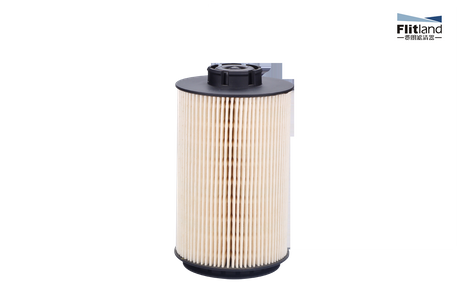
Round/cylindrical filters: Common in some European and Asian vehicles, as well as many commercial trucks.
Tapered/conical filters: Often found in performance air intake systems.
Flitland produces air filters in a wide range of sizes and shapes, including models like the F002H60012, which is designed to fit Force, Bajaj Tempo, and Mahindra vehicles. Always confirm fitment before purchasing.
Unlike HVAC filters that use MERV ratings, automotive air filters are measured by efficiency, dust holding capacity, and airflow restriction.
Efficiency refers to the percentage of particles of a certain size that the filter captures. For example, a filter with 99% efficiency at 5 microns captures 99 out of every 100 particles that are 5 microns or larger.
High-quality filters typically achieve 98–99.9% efficiency. Flitland, for instance, states that some of their filters using high-density environmentally friendly paper achieve 99% or higher filtration efficiency.
This measures how much dirt a filter can hold before it becomes clogged and needs replacement. A higher dust holding capacity means longer filter life, which is especially important if you drive on dirt roads or in dusty environments.
All filters create some resistance to airflow. The goal is to balance efficiency and restriction. A filter that is too restrictive can starve the engine of air, reducing power and fuel economy. A filter that is not restrictive enough may allow particles to pass through.
For most daily drivers, a quality paper or synthetic filter offers the best balance. For extreme performance or off-road use, you may choose a different trade-off.
Your driving environment has a major impact on which air filter is right for you.
| Driving Condition | Recommended Filter Type | Change Interval |
|---|---|---|
| City/highway, paved roads | Standard paper or synthetic | 12,000–15,000 miles |
| Rural, some gravel roads | Heavy-duty paper or synthetic | 10,000–12,000 miles |
| Dusty, off-road, or agricultural | Foam or high-capacity paper | 5,000–8,000 miles |
| Performance/track use | Cotton gauze or high-flow synthetic | Clean per manufacturer |
| Commercial trucking (long-haul) | Extended-life synthetic | 25,000–50,000 miles |
If you drive a commercial vehicle or operate a fleet, consider filters designed for longer service intervals. Many Flitland filters, such as the F002H60012, are advertised to provide up to 12 months of protection under normal conditions.
Follow these steps to select the correct air filter for your vehicle engine.
Remove your current air filter and check for printed dimensions or part numbers. Write down the length, width, and height. Also note whether your filter is a panel, round, or tapered design.
The manual will list the OEM part number. You can use this number to cross-reference aftermarket options from brands like Flitland, Bosch, Mann, or others.
Be honest about where you drive. If you occasionally drive on dirt roads, a standard filter may still be fine. If you live on a gravel road or drive off-road regularly, upgrade to a heavy-duty or high-capacity filter.
For most drivers, a filter with 98–99% efficiency is sufficient. If you have allergies or drive in areas with high pollen or agricultural dust, consider a filter with higher fine-particle capture.
Quality varies between manufacturers. Look for brands that disclose their media type, efficiency ratings, and testing standards. Flitland, for example, uses high-density environmentally friendly filter paper and states clear efficiency figures for many of their products.
Buy the correct filter from a reputable supplier. When installing, ensure the filter seats properly in the housing and that the housing seals completely. A loose seal allows unfiltered air to bypass the filter.
Even the best air filter needs regular attention. Here are practical maintenance tips.
Check your air filter every 6,000 to 8,000 miles or during every oil change. Hold the filter up to a light. If you cannot see light through it, the filter is clogged and needs replacement.
Normal driving: Replace every 12,000–15,000 miles or once per year.
Dusty or off-road driving: Replace every 5,000–8,000 miles or twice per year.
Commercial/heavy-duty: Follow the manufacturer’s recommended schedule, but inspect monthly.
Reduced acceleration or power
Lower fuel economy
Engine sounds rough or muffled
Check engine light (in some cases)
Black smoke from exhaust (rich mixture)
Paper and synthetic disposable filters are not designed to be cleaned. Blowing compressed air through them can create holes in the media, allowing dirt to reach your engine. Replace disposable filters when they are dirty.
For reusable cotton or foam filters, follow the manufacturer’s cleaning and re-oiling instructions precisely.
Low-cost air filters often use poor-quality media that either restricts airflow or fails to capture fine particles. Spending a few extra dollars on a quality filter like Flitland protects your engine and saves money on repairs.
A filter that almost fits is not good enough. Even a small gap allows unfiltered air to enter the engine. Over time, this causes engine wear.
A dirty filter restricts airflow, reduces performance, and hurts fuel economy. Replace your filter on schedule. The cost of a new filter is far less than the cost of engine repairs.
If your vehicle has a mass airflow sensor (most modern cars do), be very careful with oiled cotton filters. Excess oil can coat the sensor and cause driveability problems, including rough idle, stalling, and check engine lights.
If you operate a fleet, drive a commercial truck, or work in agriculture, standard passenger car filters may not be sufficient. Heavy-duty filters offer:
Higher dust holding capacity for longer service intervals
More robust construction to withstand vibration and harsh conditions
Better sealing to prevent bypass in extreme environments
Flitland produces filters for commercial applications, including models compatible with Mercedes-Benz Actros, Antos, Arocs, Citaro, and Setra vehicles, as well as Force, Bajaj, and Mahindra trucks. For example, the Filter Kit 0001809809 is designed specifically for Mercedes-Benz Axor Euro 6 trucks and includes essential filters for routine maintenance.
Choosing the right air filter for your vehicle engine does not have to be complicated. Start with the correct size and fitment based on your vehicle’s specifications. Then consider your driving conditions, desired efficiency, and maintenance preferences.
A quality air filter protects your engine, maintains performance, saves fuel, and reduces emissions. Trusted brands like Flitland offer reliable options with clear specifications, high filtration efficiency, and durable construction.
Check your air filter today. Your engine will thank you.